Table of Contents
ToggleThe Overwatch community doesn’t just play the game, they live and breathe it. From competitive ladder grinders to casual players, fans channel their passion through art. Overwatch fanart has exploded into a thriving creative ecosystem where artists reimagine heroes, celebrate iconic moments, and explore character dynamics in ways the game itself never could. Whether you’re scrolling through fan-created masterpieces, dreaming of making your own, or looking to support talented artists, understanding this creative landscape is essential to fully appreciating the Overwatch community in 2026.
Key Takeaways
- Overwatch fanart thrives on the game’s diverse character roster and rich narrative potential, enabling artists to reimagine heroes and explore dynamics that the game itself doesn’t fully develop.
- Finding quality Overwatch fanart across platforms like ArtStation, Pixiv, Twitter, and Instagram requires understanding each platform’s strengths and using targeted hashtags to discover emerging talent.
- Aspiring artists can start creating immediately using accessible digital tools like Procreate, Clip Studio Paint, or free options like Krita, with success determined by consistent practice rather than expensive equipment.
- The Overwatch fanart community grows through authentic engagement—participating in challenges, crediting creators, and interacting with fellow artists builds visibility and strengthens the entire ecosystem.
- Monetization opportunities for fanart creators include commissions, Patreon support, merchandise sales, and professional media opportunities, though commercial use exists in a legal gray area that Blizzard generally tolerates for individual creators.
What Makes Overwatch Fanart So Popular
Overwatch fanart thrives because it fills gaps that the game leaves open. While Blizzard delivers competitive gameplay and cinematic storytelling, the community takes those foundations and builds entire universes around them. The passion driving this creative output isn’t random, it stems from specific elements that make Overwatch uniquely fertile ground for artistic expression.
A Diverse Cast of Characters
The Overwatch roster spans cultures, body types, ages, and playstyles in ways few games attempt. You’ve got Tracer, the charismatic British pilot: Widowmaker, the conflicted assassin: Reinhardt, the honorable tank commander: and dozens more. Each character carries visual distinctiveness and narrative weight, giving artists endless material to work with. Fanartists celebrate these heroes by exploring their personalities, relationships, and untapped story angles. A D.Va fanart piece might showcase her as a pro player, a mecha pilot, or even a softer domestic moment away from battle, the character’s richness allows for interpretation. This variety means whether you’re looking for hyperrealistic renderings or stylized chibi fanart, there’s something resonating with the diverse interests within the fanart community.
The Competitive Gaming Connection
Overwatch esports created a secondary layer of fandom around professional players and teams. Fanartists immortalize iconic playoff moments, celebrate player achievements, and create tribute pieces for beloved roster members. When teams make a deep Overwatch League run, you’ll see an immediate surge in related fanart celebrating their accomplishments. This competitive dimension adds urgency and shared cultural moments to the creative community, fans aren’t just celebrating static character designs, they’re capturing lightning-in-a-bottle moments from live competition. The connection between esports achievement and artistic celebration reinforces why Overwatch fanart feels alive and constantly evolving.
Community-Driven Creative Expression
Unlike some franchises where fan content feels secondary, the Overwatch community operates as though fanart is a core part of the experience. Fan conventions, Discord servers, and social media channels celebrate creators as integral members rather than peripheral contributors. This welcoming environment encourages participation at all skill levels. New artists feel supported rather than intimidated, and established creators mentor rising talent. The result is a feedback loop where community engagement drives more creation, which strengthens community bonds. That’s the real engine behind Overwatch fanart’s popularity, it’s not just about the game, it’s about belonging to something larger.
Where to Find the Best Overwatch Fanart
Finding quality Overwatch fanart has never been easier, but knowing where to look separates casual browsing from discovering genuine hidden gems. The art community distributes itself across multiple platforms, each with distinct advantages and audience types.
Art Communities and Platforms
ArtStation and DeviantArt remain foundational platforms where professional and semi-professional artists post portfolios. These sites use tagging systems effectively, making it straightforward to filter for Overwatch-specific work and explore artists’ full galleries. ArtStation particularly attracts concept artists and those with polished, finished pieces. DeviantArt skews broader, hosting everything from quick sketches to commissioned work.
Pixiv, the Japanese art platform, holds an enormous reservoir of Overwatch fanart, especially work from Asian artists who sometimes don’t distribute through Western channels. If you’re comfortable navigating a Japanese interface, Pixiv offers thousands of pieces you won’t find elsewhere. The platform excels at hosting multiple art styles simultaneously, chibi cute, hyperrealistic, abstract interpretations, ship art, and niche concepts all coexist without judgment.
Tumblr has declined as an art hub compared to its 2015-2018 peak, but the Overwatch fandom there remains active. Artists use Tumblr for both finished pieces and work-in-progress shots, providing insight into creative processes. The reblog culture means curated collections are constantly circulating, making Tumblr useful for discovering trending themes.
Social Media and Content Creators
Twitter (X) is where the daily firehose of Overwatch fanart happens. Artists post in real-time, respond to prompts, and build follower bases through consistent posting. Searching hashtags like #OverwatchFanart, #OverwatchArt, or character-specific tags (#D.VaArt, #TraceArt, etc.) surfaces fresh content daily. The platform’s retweet algorithm means popular pieces reach broader audiences quickly.
Instagram attracts artists focused on polished presentation and aesthetic curation. Creators use it as a portfolio showcase, often linking to other platforms for sales or commissions. Instagram’s visual-first design makes it ideal for exploring art through discovery accounts dedicated to reposting fanart from various creators.
TikTok has become unexpectedly significant for fanart exposure, particularly through art-timelapse videos. Artists film themselves creating Overwatch fanart, set it to music, and thousands of viewers discover both the artist and the character in minutes. For newer artists, TikTok offers discoverability that’s harder to achieve on more established platforms.
Official Tournaments and Events
Blizzard occasionally features community fanart in official contexts. Official Overwatch tournaments sometimes display submitted fanart during broadcast downtime, and seasonal events feature fan-created content in promotional materials. These rare official spotlights drive significant traffic to featured artists and demonstrate that fanart isn’t just tolerated, it’s celebrated as part of the franchise. Monitoring official Overwatch social accounts reveals when submission windows open, offering opportunities for visibility. Also, fan conventions like PAX Unplugged host artist alleys filled with Overwatch fanart vendors, merch creators, and commissions. These in-person spaces offer networking and sales opportunities that online platforms can’t replicate.
Getting Started With Creating Overwatch Fanart
The barrier to entry for creating Overwatch fanart has never been lower. Accessible tools, abundant tutorials, and an encouraging community mean aspiring artists can start immediately, regardless of current skill level. The journey from fan to creator requires understanding three foundational elements.
Choosing Your Medium and Tools
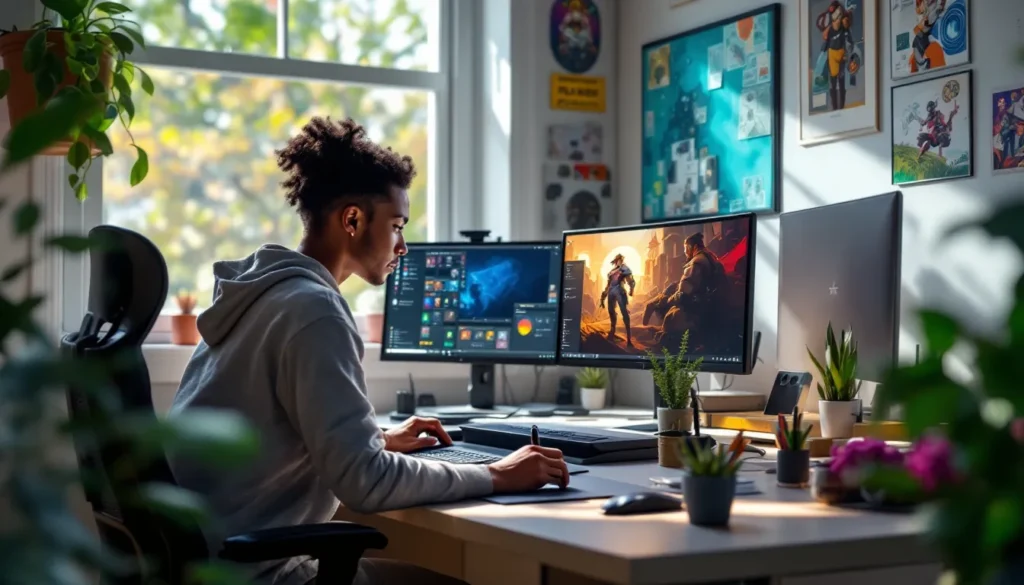
Digital art dominates the Overwatch fanart space. Clip Studio Paint has become the industry standard for anime-influenced and game art, offering affordable pricing with powerful tools. Many Overwatch fanartists prefer it specifically for character work and comic-style pieces.
Procreate on iPad offers incredible value and performance, though it requires buying an iPad ($329+). The tablet ecosystem has democratized digital art creation, you don’t need an expensive Wacom setup anymore.
Ibis Paint X is another popular choice, particularly among anime-style artists, with a free tier for experimentation. Krita remains completely free and open-source, making it perfect for artists testing the waters before investing.
Traditional art isn’t dead. Some fanartists exclusively create with pencils, markers, and ink. Traditional pieces often command higher prices and develop loyal followings specifically for the tangible, handmade quality. Many hybrid artists combine traditional sketching with digital coloring and refinement.
The most important choice is starting somewhere. Don’t get paralyzed researching software. Pick one, commit to 50 pieces, and reassess.
Understanding Character Design and Aesthetics
Overwatch characters have distinct visual languages. Tracer’s punk-meets-military aesthetic differs fundamentally from Symmetra’s high-tech elegance, which contrasts sharply with Junkrat’s post-apocalyptic scrappiness. Understanding these visual grammars prevents creating fanart that feels off-model.
Study official art. Blizzard releases character art sheets, cinematic stills, and concept work. Analyzing how official designers handle proportions, color palettes, and silhouettes teaches you the visual rules you can later break intentionally. Notice how Reinhardt’s armor simplifies into bold shapes from distance, while his face reads clearly in closeups. These aren’t accidents, they’re purposeful design decisions.
Also recognize that fanart thrives on reinterpretation. You’re not trying to become a Blizzard artist copying their exact style. Instead, you’re developing work that shows clear understanding of canonical design while introducing your unique voice. Study the character deeply, then apply your own interpretation. That tension between fidelity and creativity is where memorable fanart happens.
Finding Your Unique Artistic Style
Many beginning fanartists agonize over style, assuming they need one before creating work. This approach causes paralysis. Style emerges through repetition and experimentation, not planning.
Create 20 quick sketches of the same character. Push exaggeration in different directions, make one ultra-realistic, one chibi, one heavily stylized. Notice which approaches feel most natural to you. What techniques excite you? Clean linework or expressive sketches? Photorealism or illustration? These preferences compound into recognizable style over time.
Look at fanartists whose work moves you. Don’t copy them, but identify what appeals to you. If you love how a creator handles expressions, study their edge work, proportions, and color choices. Imitation is the fastest way to develop taste and eventually transcend it.
Comparisons to established artists used to discourage new creators. That’s reversed in 2026 communities. Sharing your early work, getting feedback, and iterating rapidly actually accelerates skill development and style formation. Post rough sketches. Ask questions. Accept critique. The artists producing stunning Overwatch fanart now didn’t start there, they started messy, uncertain, and humble.
Popular Fanart Styles and Trends
Overwatch fanart isn’t monolithic. Multiple subgenres have developed, each with distinct aesthetics, audiences, and creative approaches. Understanding these categories helps you locate work you enjoy and identify where your own interests align.
Competitive Esports Themes
Professional Overwatch produces some of the most intense fanart. Pieces celebrating playoff moments, highlighting player skill, and immortalizing championship wins resonate deeply with esports-focused fans. These pieces often incorporate team branding, action sequences, and dynamic compositions that capture competitive energy.
The esports fanart community overlaps with broader gaming journalism outlets. Platforms like Polygon and IGN occasionally feature esports-adjacent fanart in cultural coverage, giving creators unexpected mainstream exposure. This visibility has elevated esports fanart as a legitimate art category rather than niche enthusiasm.
Character-specific esports art is particularly popular, pieces celebrating Tracer as the poster character for professional Overwatch, or highlighting role specialists performing at their peak. These pieces prove that competitive gaming and artistic appreciation aren’t separate spheres: they’re deeply interconnected.
Character Relationship and Ship Art
“Ship art”, romantic or relationship-focused pieces exploring character dynamics, represents a massive portion of fanart output. Some ships reflect canonical relationships or hints (Mercy and Pharah’s connection, for instance), while others explore “what-if” scenarios rooted in character compatibility or narrative potential.
The ship community is organized, passionate, and incredibly productive. Popular ships like Tracer/Emily, Widowmaker/Symmetra, and Reinhardt/Ana generate hundreds of pieces monthly across all platforms. These aren’t frivolous, they allow fans to explore character psychology, emotional vulnerability, and interpersonal complexity beyond what the game provides.
Ship art ranges from romantic to comedic to deeply introspective. Some pieces explore tension and conflict, others celebrate comfort and domesticity. The diversity reflects how fans interpret characters as complete people rather than gameplay units. This emotional dimension of Overwatch fanart often resonates most strongly with the creative community.
Alternative Universe and Crossover Concepts
One of fanart’s greatest freedoms is recontextualizing characters entirely. Overwatch heroes in college settings, fantasy worlds, horror scenarios, modern job categories, or superhero universes, these Alternative Universe (AU) concepts push character designs into completely new contexts.
Crossovers blend Overwatch with other properties. Fanartists imagine Overwatch heroes in anime art styles, Final Fantasy frameworks, or as characters from other games. These pieces require deeper technical skill, balancing two distinct visual languages simultaneously, and they often attract massive engagement from fans of both properties.
AU and crossover art proves the character designs are robust enough to function anywhere. A piece depicting Tracer as a punk musician in the 1980s still reads as Tracer, her energy and silhouette remain recognizable even in completely altered context. This adaptability speaks to how well Blizzard designed the cast originally.
Building Your Fanart Portfolio and Audience
Creating fanart is satisfying, but building an audience transforms it into a sustainable practice. Whether your goal is recognition, commissions, or community contribution, strategic audience-building follows similar principles.
Establishing a Presence Across Platforms
One platform isn’t enough. Fanartists in 2026 operate across multiple channels simultaneously. Your primary portfolio likely lives on ArtStation or a personal website, but your daily engagement happens on Twitter, Instagram, and sometimes TikTok.
This multi-platform approach seems exhausting until you realize most pieces need only be posted once, then cross-posted with slight optimization for each platform. A finished piece goes to ArtStation with full description and tags. The same piece links to ArtStation from Instagram. Work-in-progress shots and community engagement happen primarily on Twitter. This isn’t content multiplication, it’s smart distribution.
Starting out, pick two platforms and master them before expanding. Twitter and Instagram provide good complementary coverage, Twitter for rapid sharing and community building, Instagram for portfolio presentation. Once you’ve established rhythm there, add a personal website or a third platform.
Consistency matters more than frequency. Posting one quality piece weekly builds audience more effectively than sporadic bursts. This regularity trains your audience to expect your work and keeps you visible in algorithms.
Engaging With the Overwatch Community
Audience isn’t built through broadcasting alone, it’s built through participation. The Overwatch fanart community is relatively small and interconnected. Engaging authentically accelerates visibility exponentially.
Respond to comments thoughtfully. When someone appreciates your work, brief replies, thank them genuinely, strengthen connections. When people critique constructively, engage with their points. These small interactions compound. People who feel seen by creators become invested supporters.
Participate in fanart challenges and prompts. The community regularly organizes monthly themes, character-focused challenges, and seasonal events. Participating ties your work to these collective moments, increasing algorithmic visibility. Your piece appears alongside hundreds of others using the same tag, but quality work rises through engagement and retweets.
Communicate with other fanartists. Commission work from creators whose style you admire. Share their pieces genuinely. Build actual relationships rather than viewing other creators as competition. The artists now producing thousands of followers started by being part of a community, not by isolating themselves as individuals. The best fanart communities operate like peer groups where everyone celebrates everyone else’s wins.
Engage with non-fanart content too. Comment on esports announcements, discuss patch notes, celebrate new cinematic releases. Show you’re a community member invested in Overwatch broadly, not just self-promotion.
Monetization and Professional Opportunities
Fanart can generate income through multiple channels. Commissions are the primary revenue stream, fans pay for custom pieces featuring their favorite characters or personal creations. Rates vary enormously based on skill level and complexity, ranging from $50 USD for quick sketches to $500+ for fully rendered pieces.
Parent platform monetization varies. Patreon lets supporters fund your work monthly in exchange for exclusive sketches, speedpaints, or commissioned requests. Many successful fanartists earn $1,000+ monthly through Patreon support. Ko-fi offers simpler one-time donations or tip-based support.
Merchandise generates passive income. Print-on-demand services let creators upload artwork and customers purchase prints, t-shirts, hoodies, and mugs without inventory risk. This requires building large enough audience to justify the time investment in setup, but it’s scalable without much effort once established.
Other opportunities emerge unexpectedly. Kotaku and similar gaming media occasionally interview fanartists for feature pieces, creating visibility that converts to commissions. Convention artist alley tables, merchandise partnerships with fan communities, and even private licensing deals happen when creators build recognition. The fanart scene now produces professional opportunities that didn’t exist five years ago.
Remember that monetizing fanart operates in gray legal territory. You’re creating derivative work using Blizzard’s intellectual property. While Blizzard generally permits non-commercial fanart, selling prints or merchandise theoretically violates their copyright. In practice, enforcement is minimal for individual creators, especially if you maintain a reasonable volume of original work alongside fanart. Many professional artists balance a portfolio that’s 60% fanart, 40% original work, creating a sustainable practice that respects IP while building audience and income.
Supporting Fanartists and Respecting Creative Rights
The fanart community thrives when creators feel valued and respected. As a fan consuming this work, understanding how to support artists ethically strengthens the entire ecosystem.
How to Support and Commission Artists
Credit artists always. When sharing fanart on social media, tag the creator and link their profile. This simple act drives traffic and signals to algorithms that their work deserves visibility. Screenshots without credit are destructive, they erase the artist’s attribution and reach while profiting from their labor through engagement.
Commission original work. If a fanartist’s style resonates, commissioning personal art supports them directly. Custom pieces of your own characters or specific ideas push artists creatively while providing guaranteed income. Most artists are thrilled by commission requests because they validate the work and allow for extended creative partnership.
Join Patreon or donate. Monthly support lets creators invest in tools, education, and time without depending entirely on commission hustle. Even $3 USD monthly from dozens of supporters creates meaningful income. Fanartists often provide exclusive sketches, process videos, or character design worksheets for Patreon members, making the support feel reciprocal.
Purchase merchandise. Prints, stickers, or apparel from fanartists fund their practice. Unlike commissions (which require negotiation and communication), purchasing ready-made merchandise is straightforward support that requires minimal effort from the creator.
Amplify their work. Genuinely recommend artists to friends. Share their pieces in communities where fans congregate. This organic promotion costs nothing but multiplies reach significantly. Artists whose work circulates widely attract more followers, commissions, and opportunities.
Understanding Fan Work Guidelines
Blizzard’s relationship with fanart exists in a peculiar space. The company explicitly permits non-commercial fanart, creating and sharing art for free is encouraged. Their position reflects industry evolution: companies increasingly recognize that fan creativity strengthens franchise attachment and community longevity.
The boundaries tighten with commercial use. Selling fanart in physical form, distributing it as merchandise, or monetizing it through ads technically violates copyright. But, enforcement is inconsistent and mostly targeted at large-scale infringement rather than individual creators. A fanartist selling prints at a convention operates in a gray area that Blizzard generally tolerates.
Some companies are explicit about permissions. Nintendo, for instance, occasionally issues takedowns. Blizzard takes a more permissive stance, though they reserve the right to request removal if something crosses lines. The practical rule: create and share freely for community value, but understand that large-scale commercial ventures risk legal complexity.
Respecting fan work means recognizing artists as creators deserving compensation when their work generates commercial value. Even within legal gray areas, supporting fanartists directly, through commissions, Patreon, or merchandise purchases, is ethically sound regardless of legal interpretation. When you engage with art, consider how your consumption creates value, and whether the creator is appropriately compensated.
Conclusion
Overwatch fanart has evolved from peripheral hobby content into a legitimate creative field sustaining thousands of artists. The combination of compelling character designs, passionate community, and supportive platforms created conditions where fanart doesn’t just exist, it flourishes.
For fans discovering this ecosystem, the options are overwhelming but exciting. You can explore diverse creative interpretations of characters you love, discover emerging artists whose work astonishes you, and engage with a community that celebrates creative expression as core identity.
For aspiring creators, the message is simpler: start now. Pick a tool, create something, and share it. Skill develops through repetition, not planning. The fanartists producing incredible work in 2026 started exactly where you are, uncertain and hoping someone would appreciate their effort. They received that appreciation from communities that value creative contribution. You will too.
The real magic of Overwatch fanart isn’t in any single piece. It’s in the ecosystem itself, thousands of artists interpreting, reinterpreting, and reimagining characters in infinite variations. Each piece reflects personal connection to a game and characters that matter. That’s why fanart endures. It’s not about technical skill or professional polish. It’s about passion translated into visual form. Keep supporting the artists creating it. Keep celebrating the creativity these characters inspire. The Overwatch fanart community will keep thriving because of you.